
General & Cosmetic Dentistry
The office of Keith A. Kye, DDS, FAGD serves the neighborhoods of Huntersville, Lake Norman, Davidson and Cornelius.

At the office of Keith A. Kye, DDS, FAGD, we treat ceramic crowns as a blend of precise dentistry and thoughtful craftsmanship. Modern dental ceramics allow us to rebuild teeth in a way that restores strength and function while respecting the natural look of your smile. Our goal is to deliver durable restorations that integrate seamlessly with adjacent teeth and feel comfortable in everyday use.
Teeth face many challenges over time: decay, fractures, large fillings, root canal therapy, and the gradual wear from grinding or chewing can leave a tooth vulnerable. When a simple filling can no longer provide reliable support, a full-coverage crown can protect what remains of the tooth and restore its shape and biting function. A crown is a long-term solution designed to preserve oral health and prevent future problems.
Ceramic crowns eliminate the need for metal in many cases, offering natural translucency and color that closely resemble enamel. Because they do not rely on an underlying metal substructure, ceramic restorations avoid the dark gumline effect and are often better tolerated by soft tissues. Throughout treatment, we emphasize conservative preparation, precise shade matching, and clear communication so patients understand each step of the process.
A crown is typically recommended when a tooth has lost substantial structural integrity and cannot be predictably rebuilt with a filling. Large cavities, deep cracks, or teeth that have undergone root canal therapy often need the full-coverage protection a crown provides. By encasing the visible portion of the tooth, a crown reduces the risk of future fractures and restores the tooth’s ability to handle normal chewing pressures.
Crowns also play a critical role when used in conjunction with other restorative work. They are the visible portion attached to dental implants, the connectors that anchor fixed bridges, and the protective caps used to correct significant wear or bite-related damage. In each of these situations, the crown’s role is both functional—restoring force distribution—and protective—safeguarding remaining tooth structure.
Aesthetic concerns are another common reason to choose a ceramic crown. Teeth that are deeply stained, misshapen, or worn and that do not respond to whitening or conservative bonding can be effectively rejuvenated with a crown. A well-crafted ceramic restoration can match adjacent teeth in color, translucency, and contour to create a harmonious, balanced smile.

Contemporary ceramic materials are formulated to interact with light similarly to natural tooth enamel. They exhibit translucency at the edges, subtle reflections, and surface texture that contribute to a lifelike appearance. This optical behavior makes ceramics the preferred material for restorations in the smile zone where visual integration is most important.
Because ceramic crowns are metal-free, they avoid the dark margins that can appear with metal-based restorations as gums recede slightly over time. That absence of metal also reduces the chance of a visible gray line at the gumline and tends to be gentler on soft tissues. For patients with sensitivities to metals, ceramics provide a biocompatible alternative with excellent esthetic results.
Advances in ceramic manufacturing and glazing techniques further enhance durability and stain resistance. While aesthetics are a primary benefit, many modern ceramic systems are engineered for strength as well, allowing them to withstand the forces of biting and chewing when matched appropriately to the tooth’s location. The result is a restoration that looks natural and maintains its appearance over the long term.
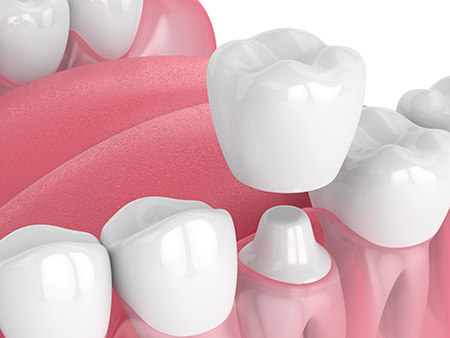
Choosing the appropriate ceramic depends on the restoration’s role and the forces it will face. For front teeth, translucency and nuanced color matching are given priority so the restoration blends imperceptibly with neighboring teeth. For molars and premolars, materials with higher flexural strength are often selected to resist heavy chewing and potential grinding forces.
Common clinical options include lithium disilicate for its balance of beauty and resilience, layered porcelain for exceptional shade characterization, and zirconia for outstanding strength in areas that demand durability. Each material offers trade-offs between thickness requirements, esthetic potential, and wear characteristics, and we recommend the option that best meets both functional and cosmetic needs.We also weigh how much natural tooth can be preserved during preparation. Some ceramics allow for thinner restorations and less aggressive tooth reduction, which helps maintain healthy tooth structure. Our treatment planning considers long-term prognosis, occlusal forces, and the adjacent teeth to achieve an outcome that is both conservative and dependable.

The process begins with a focused clinical exam and any necessary imaging to evaluate the tooth’s condition and surrounding structures. We discuss treatment goals and material options in clear, patient-friendly terms so you understand the reasoning behind the recommended approach. When a crown is the chosen solution, the tooth is prepared by removing weakened or decayed tissue and shaping the surface for accurate seating of the restoration.
Digital impressions are increasingly common and offer a comfortable, precise alternative to traditional putty impressions. Whether we use an intraoral scan or conventional impression techniques, a temporary crown protects the prepared tooth while the laboratory fabricates the final restoration. On delivery, we carefully verify fit, contact points, color match, and bite before permanently bonding the crown.
After placement, a brief period of adjustment is normal as you become accustomed to the restoration. We check occlusion and make any fine adjustments to ensure comfortable function. Long-term success depends on consistent home care—brushing, flossing, and routine dental visits—so we provide specific guidance to protect both the crown and the supporting tissues.
Our practice emphasizes conservative planning, precise execution, and attention to detail at every stage of treatment. From careful shade selection to exact margin fit and occlusal harmony, each element contributes to a crown that performs predictably and integrates naturally with your smile. With more than two decades of service in the Lake Norman area, we focus on outcomes rooted in sound clinical principles.
We stay current with materials science and laboratory techniques so that recommendations are supported by evidence and clinical experience. Treatment decisions are tailored to the individual patient—taking into account oral health, bite dynamics, and aesthetic goals—rather than relying on a one-size-fits-all approach. This measured process helps extend the life of the restoration and reduces the likelihood of complications.
If you’re considering a crown or have concerns about a weakened or unattractive tooth, our team can evaluate your situation and outline options that align with your expectations. The office of Keith A. Kye, DDS, FAGD combines modern materials and trusted techniques to restore both function and appearance while aiming to preserve as much of your natural tooth as possible.
In summary, ceramic crowns provide a durable, biocompatible solution for teeth that need structural support or aesthetic enhancement. By selecting the right material and following meticulous clinical steps, we create crowns that look natural, function well, and stand the test of time. Contact us to learn more about whether a ceramic crown is the right choice for your smile.
While a dental filling is designed to replace a portion of a decayed or damaged tooth, a dental crown offers full coverage to restore the tooth’s entire outer surface. A well-fitting dental crown not only protects and strengthens the underlying tooth structure, but it also restores the tooth’s appearance and function.
The procedure for getting an all-ceramic crown is much like the procedure for getting any other type of crown. In all cases, the tooth needs to be prepared, an impression taken, and a permanent crown cemented into place. A single all-ceramic crown can typically be fabricated over the course of two visits. However, with CAD/CAM technology, a same-day crown can be fabricated from start to finish in a single visit. With the first approach, a temporary crown is typically worn until the second visit, when the permanent restoration is placed. As with every treatment plan, our office will explain your best options in care.
As the name implies, a temporary crown is only worn for a short time until the permanent crown is placed. A temporary crown is typically fabricated from durable tooth-colored dental acrylics. While designed to protect the underlying tooth between appointments, and until your new permanent crown gets placed, a temporary crown is also fabricated to look like a natural tooth and maintain the look of your smile.
While you should feel better having an attractive and functional tooth to restore your smile, your tooth may feel a little sensitive following treatment. This initial sensitivity will subside. We take great care to make sure your new restoration looks great, fits well, and your bite is perfect. However, we’re always happy to make any minor adjustments to ensure your comfort.
With some exceptions, teeth with root canal procedures are typically restored and protected from further damage with a full-coverage crown. Based on what’s best for your smile, our office will recommend the most appropriate restoration to maintain the health and longevity of your tooth following a root canal procedure.
A dental crown is a long-term restoration that, if properly cared for, can serve you well for many years to come. Once your new crown is placed, it requires the same brushing, flossing, and periodic checkups as your natural teeth. Avoid biting your fingernails and chewing on hard or sticky objects such as ice, pencils, or taffy, which can damage or loosen your crown. Remember, clenching and grinding your teeth puts excessive pressure on both natural teeth and dental restorations. Unless treated, this habit can compromise the longevity and integrity of your dental work, including crowns.
Although your new all-ceramic crown restores the tooth's strength, form, and function, you can still develop dental disease in the absence of proper care. To prevent gum disease and tooth decay, it’s essential to brush and floss as instructed and see our office for routine checkups, cleanings, and care.
How long a dental crown lasts depends on various factors, including your level of oral care, diet, and oral habits. While the standard answer is that dental crowns can last anywhere from 5 to 15 years, existing literature confirms that most dental crowns remain in place at 15 to 20 years.
At the office of Keith A. Kye, DDS, FAGD, we strive to provide the highest quality of care to address all your dental needs. Once we’ve had the opportunity to examine your smile, we can give you a clear picture of any dental issues that are present, along with a quote for how much treatment will be. The cost of dental crowns can vary a little, depending on the type of crown and its location. Our goals are to provide the highest quality of care and help patients begin treatment without additional financial stress or delay. We’re always happy to answer all your questions on dental insurance coverage, available financing, and payment plans.
Coverage for all-ceramic crowns depends on your dental insurance plan. Today, many dental plans provide some level of coverage for all-ceramic crowns. At the office of Keith A. Kye, DDS, FAGD, we work with patients to optimize their dental benefits and get the care they need to maintain healthy and beautiful smiles!
A ceramic crown is a custom-made tooth-shaped restoration designed to cover and protect a damaged or weakened tooth. Made from advanced dental ceramics, these crowns mimic the translucency and color of natural enamel for a lifelike appearance. They restore chewing function and help maintain the alignment and health of surrounding teeth.
Ceramic crowns can be fabricated from different types of ceramic materials, each chosen for a balance of strength and esthetics. Your dentist will select the material and design based on the tooth's location, bite forces, and your cosmetic goals. Modern fabrication techniques allow for precise fits and durable bonds to the prepared tooth.
Ceramic crowns are made entirely of tooth-colored ceramic materials and are prized for their natural appearance and translucency. Porcelain-fused-to-metal (PFM) crowns combine a metal substructure with a porcelain overlay, which can provide added strength but may show a metal margin over time. All-metal crowns are very strong but are typically used in back teeth where esthetics are less critical.
The choice among these options depends on esthetic needs, functional demands, and the condition of the underlying tooth. Advances in high-strength ceramics such as zirconia and lithium disilicate have narrowed the strength gap between metal and ceramic restorations. Your dentist will explain the pros and cons of each material so you can choose the best option for your situation.
Good candidates for ceramic crowns include patients with fractured, extensively decayed, or severely worn teeth that cannot be repaired with a simple filling. Ceramic crowns are also commonly used to restore teeth after root canal treatment, to improve the shape of a misshapen tooth, or as part of a cosmetic smile makeover. A thorough clinical exam and digital images help determine whether a ceramic crown is the most appropriate solution.
At the office of Keith A. Kye, DDS, FAGD, we evaluate each case individually, considering bite, gum health, and the condition of adjacent teeth. If there are active periodontal issues or uncontrolled bruxism (teeth grinding), those concerns are addressed before crown placement. The goal is a long-lasting restoration that meets both functional and esthetic needs.
The ceramic crown process usually begins with a comprehensive exam, digital X-rays, and a treatment plan. During tooth preparation, a small amount of enamel is removed to create space for the crown; a digital scan or impression is then taken to capture the exact shape of the prepared tooth. A temporary crown may be placed while the final restoration is fabricated in a dental laboratory or milled in-office using CAD/CAM technology.
At the final appointment the temporary crown is removed, the fit and color of the permanent crown are verified, and the restoration is bonded or cemented in place. The dentist checks your bite and makes any necessary adjustments to ensure comfort and proper function. Follow-up visits may be scheduled to confirm the crown is integrating well with surrounding tissues.
Caring for a ceramic crown is much like caring for your natural teeth: brush twice daily with a soft-bristled toothbrush and fluoride toothpaste, and floss daily to remove plaque at the gumline. Maintaining good oral hygiene reduces the risk of decay at the crown margins and helps preserve the supporting tooth structure. Routine dental checkups and professional cleanings are important to monitor the crown and surrounding tissues.
Avoid using your teeth as tools and limit habits that place excessive force on the crown, such as biting hard objects or chewing ice. If you have a history of grinding or clenching, your dentist may recommend a custom nightguard to protect the crown and other teeth. Promptly report any sensitivity, looseness, or unusual discomfort so issues can be addressed early.
The lifespan of a ceramic crown depends on factors such as oral hygiene, bite forces, material selection, and regular dental care. With proper maintenance and routine professional oversight, ceramic crowns commonly last many years and often a decade or longer. High-quality materials and precise bonding techniques contribute to durability and long-term success.
Individual results vary, so ongoing monitoring is important to catch wear, marginal breakdown, or underlying tooth problems early. When concerns arise, your dentist can evaluate the crown and recommend repair or replacement options that preserve tooth structure and overall oral health.
Yes, ceramic crowns are widely used on both front (anterior) and back (posterior) teeth, with material choice tailored to the tooth's functional demands. For front teeth, esthetic materials that closely mimic natural translucency are preferred, while stronger ceramic formulations such as monolithic zirconia may be selected for molars to withstand higher chewing forces. Modern ceramics offer a good balance of esthetics and strength when selected appropriately.
Your dentist will assess your bite, the amount of remaining tooth structure, and esthetic expectations to recommend the optimal ceramic material. In some cases, a layered ceramic design or reinforced core may be used to combine strength with a lifelike appearance. The treatment plan aims to deliver a reliable restoration that blends seamlessly with your smile.
Ceramic materials used for dental crowns are generally biocompatible and well tolerated by the soft tissues of the mouth. They have a low risk of causing allergic reactions compared with certain metals, making them a suitable choice for patients with metal sensitivities. Ceramic surfaces are also resistant to staining and tend to maintain their esthetic qualities over time with proper care.
If you have a known material sensitivity or complex medical history, disclose this information during your consultation so your dentist can select the most appropriate options. Properly finished ceramic margins and attention to oral hygiene help minimize gum irritation and support long-term tissue health around the restoration.
Most patients experience minimal recovery time after permanent crown placement, with any sensitivity generally resolving within a few days to weeks. You may notice mild tenderness or gum irritation near the crown that improves with routine oral care and time. Avoid very hard or sticky foods for a short period if instructed, and follow any specific post-op guidance from your dentist.
If sensitivity persists, the crown feels high when biting, or you notice looseness, contact your dental office for evaluation. Timely adjustments or interventions can relieve discomfort and prevent complications, ensuring the crown functions comfortably as part of your everyday bite.
Ceramic crowns are frequently used as the visible restoration on dental implants and as part of fixed bridges, offering a natural-looking replacement for missing teeth. When used with implants, the crown is attached to a custom abutment that connects to the implant fixture, and precise fabrication ensures proper alignment, occlusion and esthetics. For bridges, ceramic crowns can form the pontics and retainers that restore one or more missing teeth while distributing chewing forces across supporting teeth.
The office of Keith A. Kye, DDS, FAGD in Huntersville coordinates implant and restorative care to achieve accurate fit and long-term function whether a single implant crown or a multi-unit bridge is needed. Careful planning, appropriate material selection, and regular maintenance are essential to the success and longevity of implant-supported and bridge restorations.
The office of Keith A. Kye, DDS, FAGD serves the neighborhoods of Huntersville, Lake Norman, Davidson and Cornelius.